
Download links
How to install Unleashing the Thrill: The World of Rally Racing APK?
1. Tap the downloaded Unleashing the Thrill: The World of Rally Racing APK file.
2. Touch install.
3. Follow the steps on the screen.
Description
Rally racing has a storied history that traces back to the early 20th century, when automobiles were still a novelty and the concept of racing was in its infancy. The first recorded rally took place in 1907, known as the Paris to Madrid race, which was more of a long-distance endurance test than the organized events we see today. This early competition set the stage for what would evolve into a distinct motorsport discipline.
As automobiles became more reliable and faster, enthusiasts began to organize events that would challenge both the drivers and their machines over varied terrains. The 1920s and 1930s saw the emergence of organized rallies in Europe, with events like the Monte Carlo Rally gaining prominence.
The post-World War II era marked a significant turning point for rally racing. The sport began to gain traction in the 1950s and 1960s, particularly in Europe, where manufacturers recognized the potential for marketing their vehicles through motorsport. The introduction of the World Rally Championship (WRC) in 1973 further solidified rally racing’s status as a premier motorsport.
This global series brought together the best drivers and manufacturers, creating a competitive environment that showcased the capabilities of rally cars. Over the decades, rally racing has evolved from a niche pastime into a global phenomenon, attracting millions of fans and participants worldwide. The sport’s unique blend of speed, skill, and adventure continues to captivate audiences, making it one of the most exciting forms of motorsport today.
Key Takeaways
- Rally racing has evolved from its humble beginnings to become a global phenomenon, with a rich history dating back to the early 20th century.
- The adrenaline-pumping experience of rally racing is unmatched, as drivers navigate through challenging terrain at high speeds, pushing themselves and their vehicles to the limit.
- High-performance vehicles, such as the iconic Subaru Impreza and Mitsubishi Lancer Evolution, dominate the world of rally racing, with their advanced technology and capabilities.
- Rally racing has produced legendary champions and rising stars who have left their mark on the sport, showcasing exceptional skill and determination.
- From treacherous terrain to unpredictable weather, rally racing presents a myriad of challenges that make it one of the most demanding and thrilling sports in the world.
- The future of rally racing is evolving with advancements in technology and safety measures, promising fans an even more exhilarating and competitive experience in the years to come.
The Thrill of the Chase: Exploring the adrenaline-pumping experience of rally racing
The essence of rally racing lies in its exhilarating nature, where drivers navigate through challenging courses that test their skills and instincts. Unlike traditional circuit racing, where drivers compete on closed tracks, rally racing takes place on public roads or off-road terrains, often featuring a mix of gravel, dirt, snow, and tarmac. This diversity in surfaces adds an element of unpredictability that heightens the thrill for both drivers and spectators.
The adrenaline rush begins long before the engines roar to life; it starts with the anticipation of tackling unknown routes and overcoming obstacles that can arise at any moment. As drivers speed through winding roads and treacherous landscapes, they rely heavily on co-drivers who provide crucial pace notes—detailed instructions about upcoming turns, jumps, and hazards. This teamwork is vital for success in rally racing, as split-second decisions can mean the difference between victory and disaster.
The experience is not just about speed; it’s about precision and control under pressure. The roar of engines, the smell of burning rubber, and the sight of dust clouds billowing behind speeding cars create an atmosphere charged with excitement. Fans lining the stages witness breathtaking moments as cars drift around corners or leap over crests, showcasing the incredible skill required to master such demanding conditions.
The Cars of Rally Racing: A look at the high-performance vehicles that dominate the sport
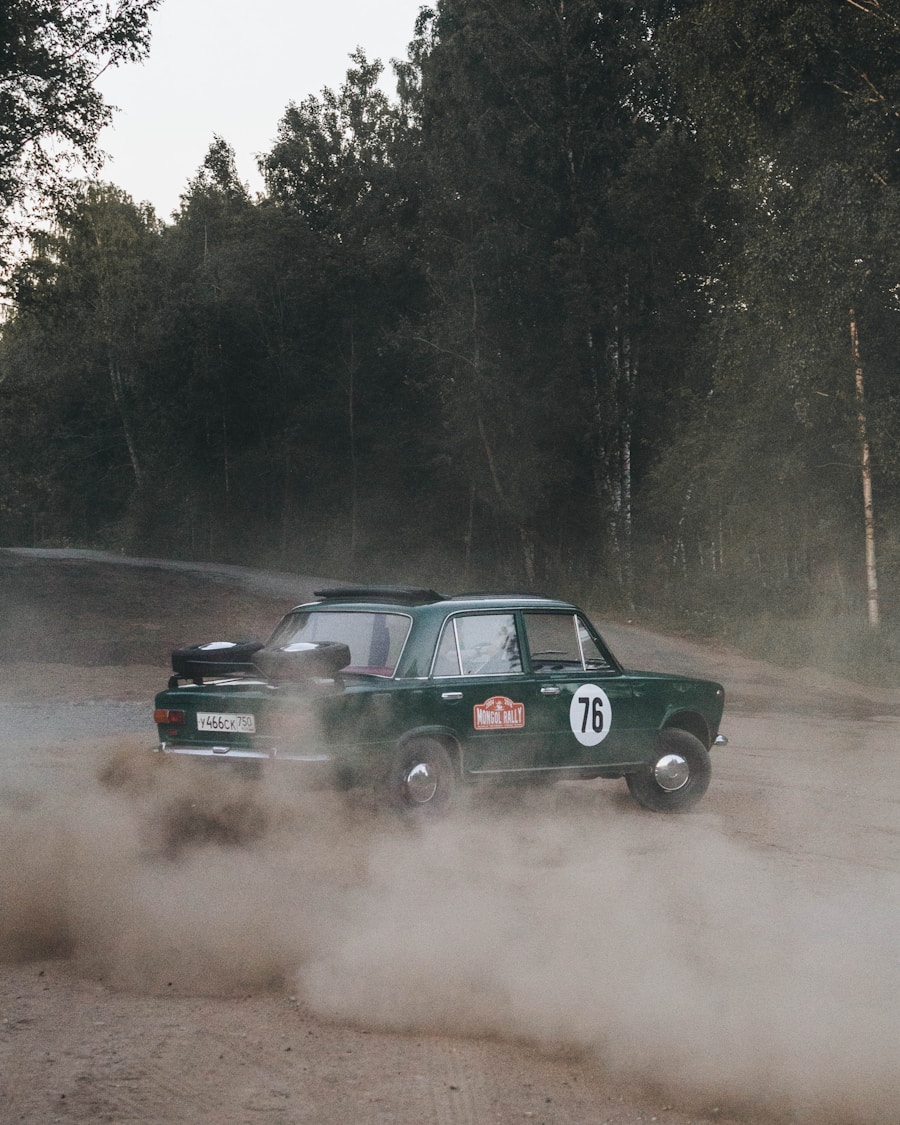
Rally cars are engineering marvels designed specifically to withstand the rigors of diverse terrains while delivering exceptional performance. These vehicles are typically based on production models but undergo extensive modifications to enhance their capabilities. Key features include reinforced chassis, advanced suspension systems, and powerful turbocharged engines that can produce upwards of 300 horsepower.
Manufacturers like Ford, Subaru, Volkswagen, and Toyota have developed iconic models that have become synonymous with rally success. For instance, the Ford Fiesta ST and Subaru WRX STI are celebrated for their agility and responsiveness on both gravel and tarmac. One of the most significant aspects of rally car design is their ability to adapt to various conditions.
Many modern rally cars are equipped with all-wheel drive systems that provide superior traction on slippery surfaces. Additionally, advancements in technology have led to innovations such as active differentials and sophisticated telemetry systems that allow teams to monitor performance in real-time. The evolution of materials has also played a crucial role; lightweight composites are now commonly used in construction to improve speed without sacrificing durability.
As manufacturers continue to push the boundaries of automotive engineering, rally cars remain at the forefront of performance technology, embodying the spirit of competition and innovation.
The Champions of Rally Racing: Celebrating the legends and rising stars of the sport
| Driver | Championship Wins | Rally Wins | Podium Finishes |
|---|---|---|---|
| Sébastien Loeb | 9 | 79 | 116 |
| Sébastien Ogier | 7 | 53 | 100 |
| Tommi Mäkinen | 4 | 24 | 45 |
| Colin McRae | 1 | 25 | 42 |
| Carlos Sainz | 2 | 26 | 97 |
Throughout its history, rally racing has produced a plethora of legendary drivers who have left an indelible mark on the sport. Names like Sébastien Loeb and Colin McRae resonate deeply within the rally community. Loeb, a nine-time World Champion, is renowned for his unparalleled consistency and skill across various terrains.
His dominance in the early 2000s helped elevate the profile of rally racing globally. Similarly, Colin McRae became a household name not only for his driving prowess but also for his charismatic personality that endeared him to fans around the world. His victory in the 1995 World Rally Championship made him a symbol of rallying’s appeal.
As we look toward the future, new talents are emerging on the scene, ready to carve their names into rally history. Drivers like Kalle Rovanperä and Elfyn Evans are showcasing remarkable skills that suggest they could become future legends. Rovanperä, at just 22 years old, has already made waves by becoming one of the youngest winners in WRC history.
His ability to adapt quickly to different conditions and his fearless approach have garnered attention from fans and experts alike. Meanwhile, Evans has consistently demonstrated his competitiveness against seasoned veterans, proving that he has what it takes to challenge for championships. The sport’s rich tapestry is woven with stories of triumph and perseverance, ensuring that rally racing remains vibrant with both established icons and promising newcomers.
The Challenges of Rally Racing: From treacherous terrain to unpredictable weather, the obstacles that make this sport so demanding
Rally racing is not merely about speed; it is an intricate dance with nature’s unpredictability. Drivers face a myriad of challenges that test their mettle at every turn. One significant obstacle is the terrain itself; courses can range from smooth asphalt roads to rugged mountain trails littered with rocks and mud.
Each stage presents unique difficulties that require drivers to adapt their techniques continuously. For instance, navigating through a forested area may involve tight corners and limited visibility, while open fields might demand high-speed precision driving. Weather conditions further complicate matters; rain can transform a dry road into a slippery hazard within minutes, while snow can obscure vital landmarks that drivers rely on for navigation.
Rally teams must be prepared for anything—strategizing tire choices based on weather forecasts or adjusting suspension settings to accommodate changing surfaces. Moreover, mechanical failures can occur at any moment due to the extreme stresses placed on vehicles during competition. A small miscalculation or equipment malfunction can lead to catastrophic results, making reliability as crucial as speed in this demanding sport.
The Future of Rally Racing: How the sport is evolving and what fans can expect in the years to come

Rally Racing: Embracing Innovation and Sustainability
The sport of rally racing is undergoing a significant transformation in response to technological advancements and shifting audience expectations. A notable trend is the growing emphasis on sustainability in motorsport, driven by concerns about environmental impact.
### The Rise of Electric and Hybrid Vehicles
The introduction of electric vehicles into competitive formats is already underway, with events showcasing electric SUVs in remote locations while promoting environmental awareness. This shift towards hybrid and electric technologies is a significant step towards reducing the environmental footprint of rally racing.
### Enhancing Fan Engagement through Digital Technology
Digital technology is revolutionizing how fans engage with rally racing. Live streaming services and social media platforms enable enthusiasts to follow events in real-time from anywhere in the world. Virtual reality experiences are also becoming more prevalent, offering fans immersive ways to experience rallies as if they were behind the wheel themselves.
### A Bright Future for Rally Racing
As rally racing continues to evolve, it is poised to thrive in an increasingly competitive sports environment. With a commitment to sustainability and an eye towards fan engagement through digital platforms, this dynamic sport will continue to captivate audiences with its unique blend of skill, speed, and unpredictability.
FAQs
What is rally racing?
Rally racing is a form of motorsport that takes place on public or private roads with modified production or specially built road-legal cars. It is known for its challenging courses and varying road conditions.
How does rally racing differ from other forms of racing?
Rally racing differs from other forms of racing in that it takes place on a variety of road surfaces, including gravel, dirt, snow, and tarmac. The courses are often longer and more unpredictable, requiring drivers and co-drivers to navigate through different terrains and weather conditions.
What are the different types of rally racing events?
There are several types of rally racing events, including stage rallies, rallycross, and endurance rallies. Stage rallies are the most common and involve timed stages on closed public roads. Rallycross events take place on a closed circuit with mixed surfaces, and endurance rallies cover long distances over multiple days.
What are the key skills required for rally racing?
Rally racing requires drivers to have exceptional car control, quick reflexes, and the ability to adapt to changing road conditions. Co-drivers also play a crucial role in providing accurate navigation and pace notes to the driver.
What are some famous rally racing events?
Some famous rally racing events include the World Rally Championship (WRC), the Dakar Rally, the Monte Carlo Rally, and the Rally Finland. These events attract top drivers and teams from around the world and are known for their challenging courses and competitive nature.